
A calendar subscription never hurts. That’s actually its main strength.
Fifteen euros a month slips under the radar. Nobody debates it in a meeting. Nobody compares it to anything.
Then one day you look at the statement. And you find a line you’ve been paying for four years.
On this page
Two ways to pay for a calendar
The market splits into two camps. They look nothing alike.
The per-user subscription. This is the model of online tools. You pay every month, for each person who takes meetings. The price follows your team: the team grows, the bill grows.
The license, yearly or lifetime. This is the model of WordPress plugins. You pay for one site, sometimes for several. The number of users often changes nothing.
Both make sense. The first asks for nothing upfront. The second asks for an effort at the start, then goes quiet.
The trap isn’t in the model. It’s in the time frame you compare. People compare months when they should compare years.
The math over five years
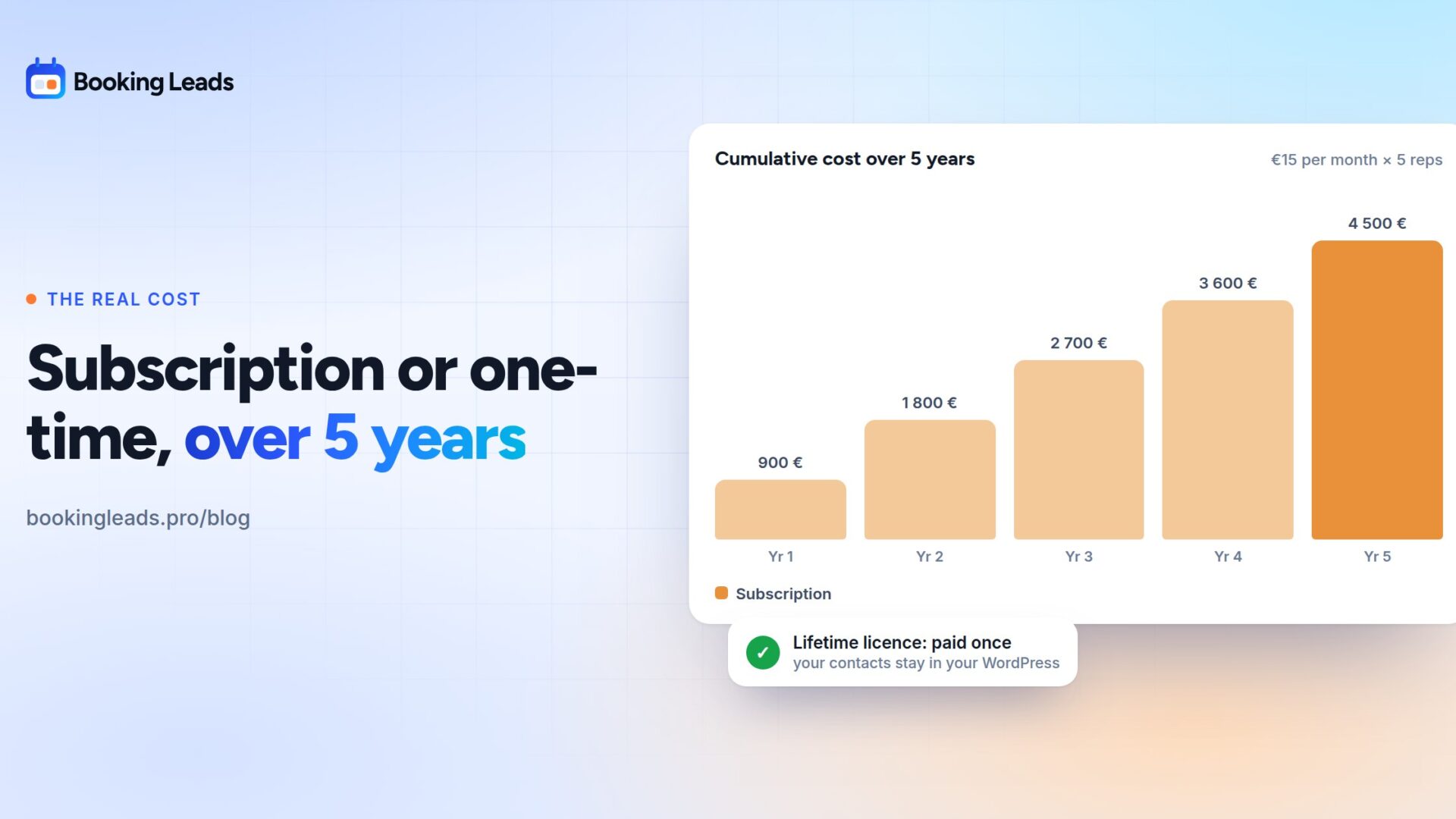
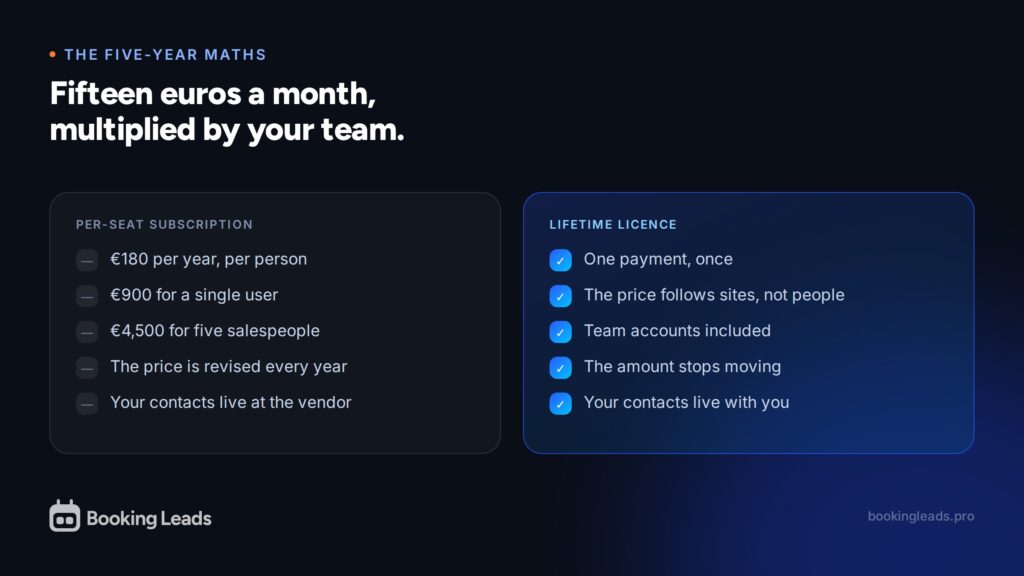
Let’s take a simple assumption. Fifteen euros per month per person, so one hundred and eighty euros a year. Swap in the real price of yours.
| Time frame | One person | Three people | Five people |
|---|---|---|---|
| 1 year | 180 € | 540 € | 900 € |
| 2 years | 360 € | 1,080 € | 1,800 € |
| 3 years | 540 € | 1,620 € | 2,700 € |
| 5 years | 900 € | 2,700 € | 4,500 € |
These amounts are a projection, not an invoice. They give you the order of magnitude.
Two things stand out. The right-hand column is triple the first, for the same tool. And the bottom line is far from trivial: 4,500 € is a budget line, not an accounting detail.
And your team almost always grows in one direction: up.
The four costs nobody adds up
The table above is optimistic. It leaves out four lines.
- The feature locked in the higher tier: routing between reps, conditional forms or removing the vendor’s branding often live one step up.
- The second tool: the calendar doesn’t capture drop-offs, so you add a form tool. A second subscription.
- The yearly increase: a subscription price gets revised. Yours has probably moved since you signed up.
- The exit cost: switching tools means exporting again, setting up again, training again. That cost appears on no pricing page.
Add up these four lines. The gap between the two models grows even wider.
The question that matters more than price
Ask yourself this one. What happens to your contact database the day you stop paying?
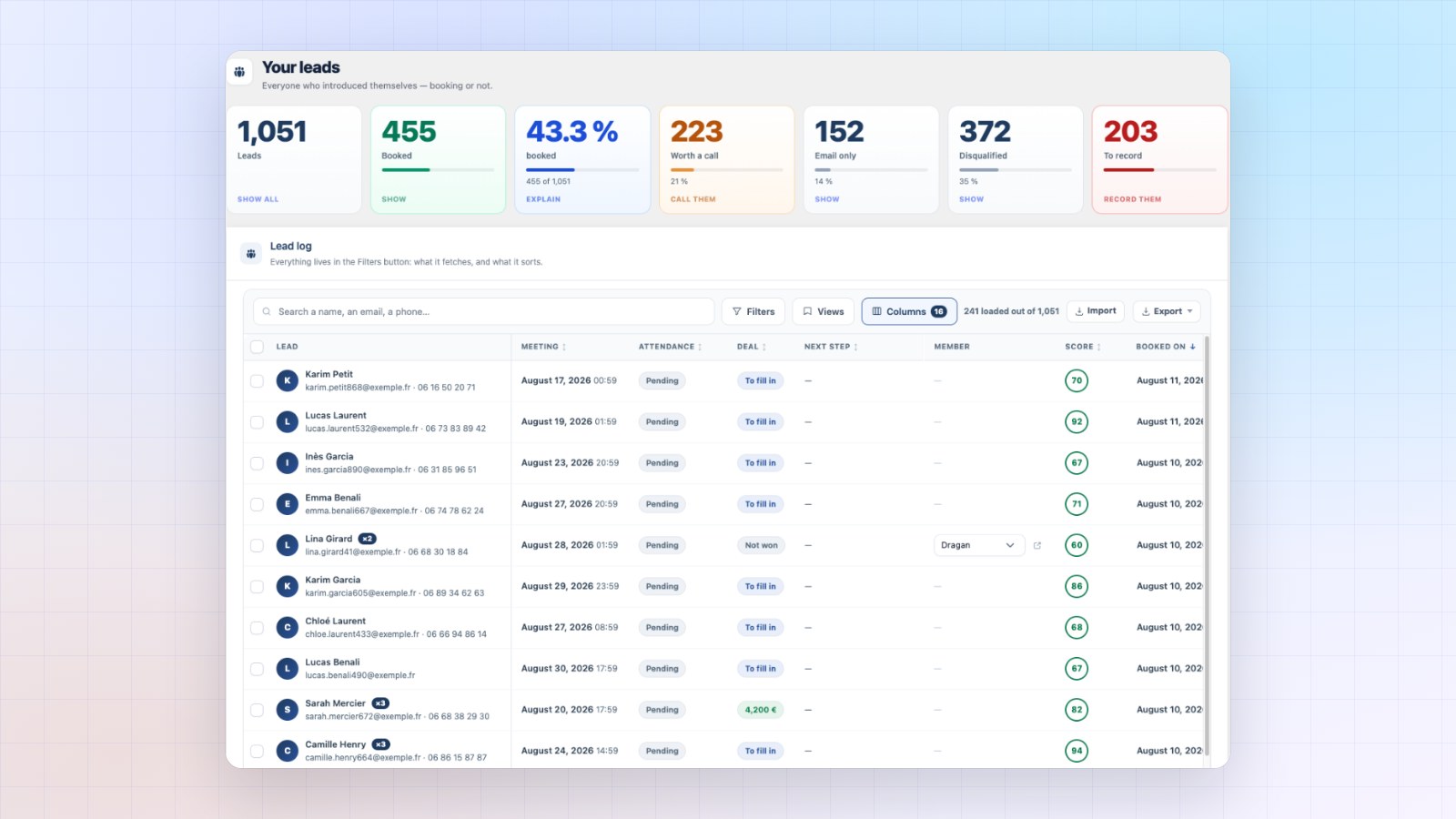
With an online tool, your meetings and your contacts live with the vendor. You have access, not ownership. That access depends on a payment, on a pricing policy, and sometimes on an acquisition nobody saw coming.
An export usually exists. It gives you a file. It leaves behind the history, the links between records and the settings.
With a plugin installed on your site, the question never comes up. The database is yours. It sits on your hosting, in your backup, under your control.
This isn’t a technical argument. It’s an argument about assets. Your prospects are the most valuable thing you have. They belong in your own house.
What Booking Leads chose
I answered both questions the same way.
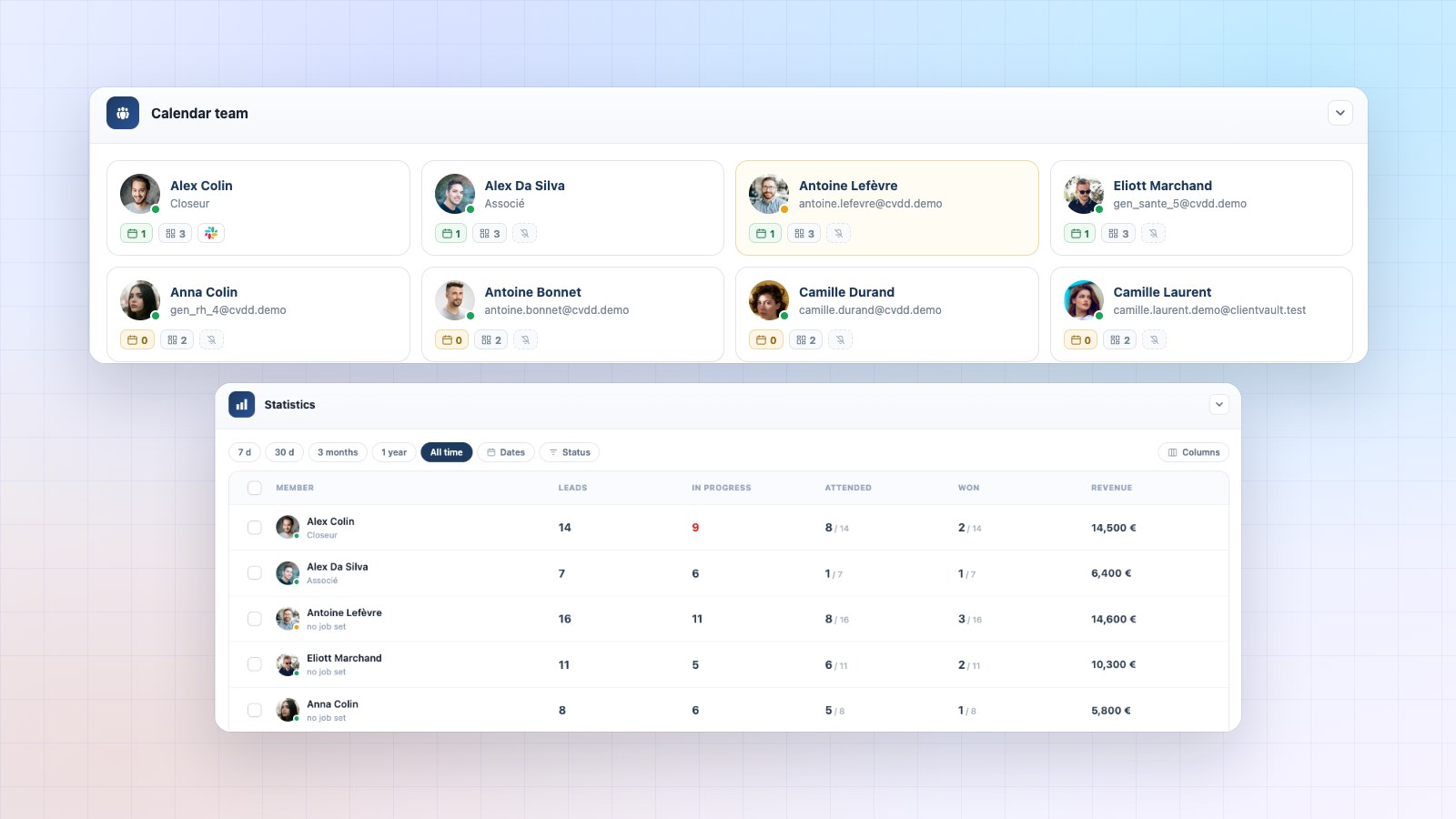
Booking Leads is a one-time purchase. There’s no monthly subscription, and lifetime offers are available from the first tier. The price follows the number of sites, never the number of reps: team accounts are included from the very first site.
Your contacts live in the database of your own WordPress site. On your hosting, in your country, under your backup. Only you have access to them, not even me.
This choice has a direct effect on the previous question. The day your license lapses, the admin area closes. Your public site stays exactly the same, down to the pixel, and your data stays where it is: with you.
The math when you manage a portfolio
The math changes again when you manage a portfolio of sites.
A per-user subscription multiplies by the number of clients and by their teams. A multi-site license divides. Twenty-five installations under a single purchase bring the cost per client down to almost nothing.
You bill for the setup, the training, the monthly follow-up. White label puts your name in place of ours. Your client sees your tool.
One payment, and the tool is yours
You can redo the math in two minutes. Take your calendar’s monthly price, multiply by the number of people, then by sixty months.
Add the four lines nobody adds up: the higher-tier feature, the second form tool, the yearly increase, and the exit cost.
On the other side, Booking Leads is a one-time purchase. The price follows the number of sites, never the number of reps: hiring costs you nothing extra. Team accounts and meeting routing are included from the very first site.
The second saving never shows up on a bank statement. Your contacts live in your own site’s database: they belong to you, today and in five years. You alone have access to them.
The founder offer is open for fifty spots, as a one-time payment, for life.
Your questions on price and ownership
How much does an online calendar cost over five years?
For a subscription at 15 € per month per person, count 900 € for one user and 4,500 € for five. Then add the higher tiers and the price increases.
Is a subscription or a lifetime license better?
The subscription wins over a short time frame or for an uncertain activity. The lifetime license wins as soon as you use it for more than a year or your team has several people.
What happens to my contacts if I stop paying?
With an online vendor, you lose access and keep, at best, an exported file. With a plugin installed on your site, the database stays on your hosting, whatever happens to the license.
Does the price of Booking Leads depend on the number of reps?
The price follows the number of sites. Team accounts are included from the very first site, along with meeting routing between reps.
What happens if the license lapses?
The admin area closes, and outgoing sends pause. Your public site stays the same for your visitors, and your data stays in your database.
Is a multi-site license worth it for an agency?
Yes, from just a few clients. The cost per installation drops, white label lets you present the tool under your own name, and you bill the setup on every deployment.
Do I still need to pay for my booking calendar?
Yes, if yours is a paid one. Booking Leads is a layer that sits in front of it, not a replacement. The good news: it works with the entry version of several plugins.